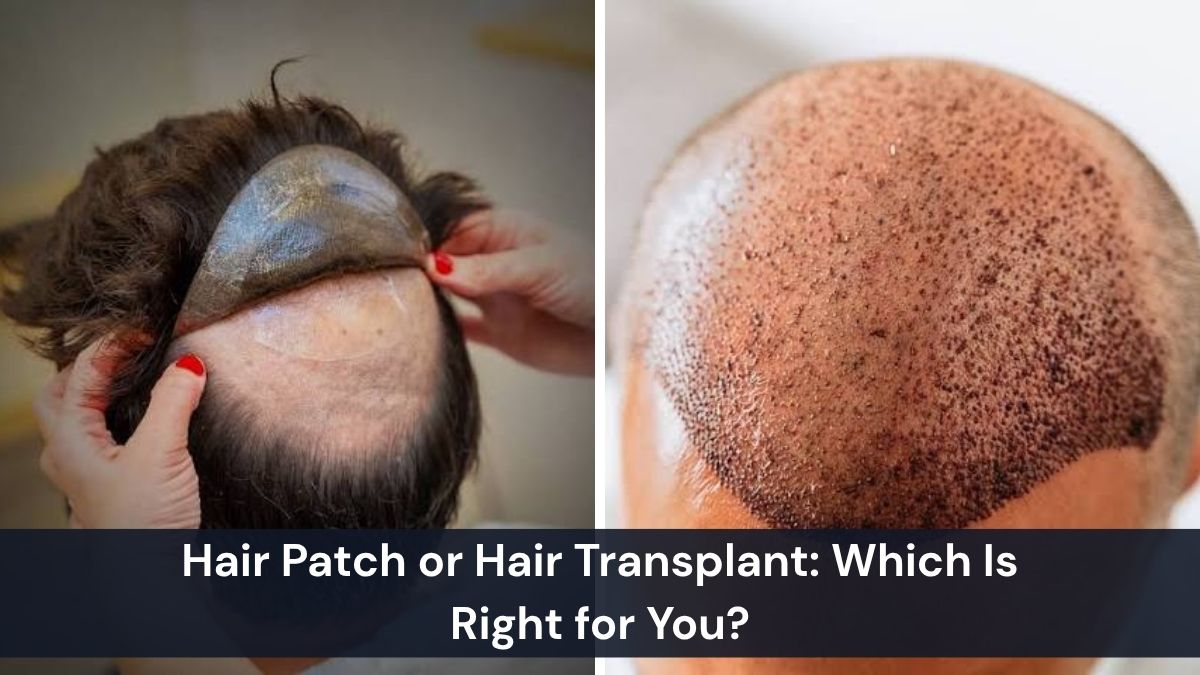
Hair loss can affect people differently. Some may experience a receding hairline, while others notice thinning at the crown or more extensive baldness. When looking for a solution, two commonly considered options are hair patches and hair transplants.
However, they work in completely different ways.
A hair patch is a non-surgical hair replacement solution that provides cosmetic coverage, while a hair transplant is a surgical procedure that moves healthy hair follicles to areas affected by hair loss.
So, which option is right for you?
The answer depends on factors such as your hair-loss pattern, expectations, available donor hair, budget, willingness to undergo surgery, and whether you want immediate coverage or long-term surgical restoration.
This guide compares hair patch vs hair transplant to help you make an informed decision.
Hair Patch or Hair Transplant?
A hair patch may be suitable if you want immediate, non-surgical cosmetic coverage for hair loss. A hair transplant may be considered if you are a suitable medical candidate for surgical hair restoration and are willing to wait for transplanted hair to grow.
Neither option is automatically "better" for everyone.
The right choice depends on your individual hair loss and goals.
What Is a Hair Patch?
A hair patch, also known as a hair system or non-surgical hair replacement, is designed to cover an area affected by hair loss.
It can be customized based on factors such as:
- Hair color
- Hair texture
- Hair density
- Hair length
- Coverage area
- Hairline design
- Hairstyle
A hair patch does not grow new hair or treat the underlying cause of hair loss. Instead, it provides immediate cosmetic coverage.
Main Benefits of a Hair Patch
- Non-surgical solution
- Immediate visible coverage
- No surgical recovery period
- Can be customized for a natural-looking appearance
- Suitable for different stages of visible hair loss
- Usually reversible
However, a hair patch requires proper cleaning, maintenance, and periodic replacement or servicing depending on the system.
What Is a Hair Transplant?
A hair transplant is a surgical hair restoration procedure. Healthy hair follicles are taken from a donor area, usually the back or sides of the scalp, and transplanted into areas affected by hair loss.
Common hair transplant techniques include:
- FUE (Follicular Unit Extraction)
- FUT (Follicular Unit Transplantation)
A hair transplant is not an immediate cosmetic solution. The transplanted hair typically goes through a growth cycle, and visible results develop over time.
The American Academy of Dermatology notes that hair transplantation may provide permanent results for appropriate candidates, but suitability depends on factors including the type of hair loss and the availability of healthy donor hair.
Hair Patch vs Hair Transplant: Key Differences
| Feature | Hair Patch | Hair Transplant |
|---|---|---|
| Type of solution | Non-surgical hair replacement | Surgical hair restoration |
| Immediate coverage | Yes | No |
| Uses your natural follicles | No | Yes |
| Surgery required | No | Yes |
| Recovery period | No surgical recovery | Recovery required |
| Results | Immediate cosmetic appearance | Develop gradually |
| Maintenance | Regular maintenance required | Ongoing natural hair care |
| Reversible | Generally yes | Surgical procedure is permanent |
| Treats underlying hair loss | No | Does not necessarily stop future hair loss |
| Candidate suitability | Depends on scalp and system requirements | Depends on donor hair and medical evaluation |
Choose a Hair Patch If You...
A hair patch or hair wig may be a suitable option if:
You Want Immediate Results
A hair patch can provide visible coverage as soon as it is properly fitted and styled.
You Do Not Want Surgery
If you prefer a non-surgical hair replacement option, a hair patch avoids surgical procedures.
You Have Significant Visible Hair Loss
Depending on the hair-loss pattern, a customized system can provide coverage even when there is limited natural hair in the affected area.
You Want to Change Your Hairstyle
Hair systems can be customized according to length, texture, color, and hairstyle preferences.
You Want a Reversible Option
Hair patches can generally be removed or replaced, making them a flexible cosmetic option.
Consider a Hair Transplant If You...
A hair transplant may be worth discussing with a qualified hair restoration professional if:
You Want Surgical Hair Restoration
A transplant uses your own hair follicles rather than an external hair replacement system.
You Have Suitable Donor Hair
A successful procedure depends on factors such as the quality and availability of donor hair.
You Are Comfortable With a Surgical Procedure
Hair transplantation involves a medical procedure and recovery.
You Can Wait for Results
Transplanted hair does not provide the same immediate appearance as a hair patch. Growth and visible results take time.
Your Hair Loss Has Been Properly Evaluated
Hair loss can have different causes. A proper assessment helps determine whether a transplant is appropriate.
Which Option Looks More Natural?
Both options can potentially create a natural-looking appearance when properly selected and performed.
A customized hair patch can be designed to match:
- Existing hair color
- Hair texture
- Hair density
- Hairline
- Hairstyle
A hair transplant uses your own growing hair, which can create a natural appearance when performed appropriately and when sufficient donor hair is available.
The final result depends more on quality, planning, customization, and suitability than simply choosing one option over the other.
Which is Better for Different Hair Loss Stages?
There is no universal answer.
A hair transplant may not be suitable for every person experiencing hair loss, particularly when donor hair is insufficient or the hair-loss pattern is not appropriate for transplantation.
Similarly, the right hair patch depends on factors such as scalp condition, coverage requirements, lifestyle, and maintenance preferences.
The Best Approach
Instead of asking only:
"Which is better: hair patch or hair transplant?"
Ask:
"Which option best matches my hair-loss pattern, expectations, lifestyle, and long-term goals?"
This is a more useful way to compare the two options.
Hair Patch vs Hair Transplant: What About Cost?
The cost of both options can vary significantly.
Hair Patch Cost Factors
The cost may depend on:
- Hair quality
- Base material
- Size of the patch
- Customization
- Hair length and density
- Fitting and styling
- Ongoing maintenance and replacement
Hair Transplant Cost Factors
The cost may depend on:
- Number of grafts required
- Hair-loss area
- Technique used
- Clinic and surgeon
- Complexity of the procedure
It is important to consider long-term costs, not just the initial price.
A hair patch may require ongoing maintenance and replacement, while a hair transplant involves an upfront surgical procedure and may still require future treatment or management if natural hair loss continues.
Hair Patch vs Hair Transplant: Maintenance
Hair Patch Maintenance
A hair patch requires regular care, which may include:
- Cleaning
- Proper drying
- Gentle styling
- Attachment maintenance
- Periodic servicing
- Replacement when required
Hair Transplant Maintenance
After the healing period, transplanted hair can generally be treated like natural hair. However, a hair transplant does not necessarily prevent further loss of non-transplanted hair.
Your doctor may recommend a long-term hair-loss management plan depending on the cause and pattern of hair loss.
Is a Hair Patch Better Than a Hair Transplant?
A hair patch may be better for you if your priority is:
Immediate coverage + no surgery + flexibility
A hair transplant may be more suitable for you if your priority is:
Using your own hair + surgical restoration + long-term results, and you are an appropriate candidate.
The best choice depends on individual circumstances.
Frequently Asked Questions
Is a hair patch permanent?
No. A hair patch is a cosmetic hair replacement system and usually requires ongoing maintenance and eventual replacement.
Is a hair transplant permanent?
Transplanted follicles can continue to grow for the long term, but individual results vary. A hair transplant also does not necessarily stop future hair loss in non-transplanted areas.
Does a hair patch damage existing hair?
This can depend on the attachment method, fitting, scalp condition, hygiene, and maintenance. Proper professional fitting and care are important.
Can I get a hair transplant if I am completely bald?
Suitability depends largely on the availability and quality of donor hair. A qualified professional needs to assess whether sufficient donor follicles are available.
Which option gives faster results?
A hair patch provides immediate cosmetic coverage after fitting, while hair transplant results develop gradually as transplanted hair grows.
Final Verdict: Which Hair Loss Solution Is Right for You?
There is no single best solution for every person with hair loss.
Choose a hair patch if you want immediate, non-surgical, customizable cosmetic coverage.
Consider a hair transplant if you want surgical hair restoration using your own follicles, have suitable donor hair, and are comfortable with a procedure and waiting for hair growth.
Before making a decision, consider your hair-loss pattern, donor hair availability, expectations, lifestyle, maintenance preferences, and long-term goals.