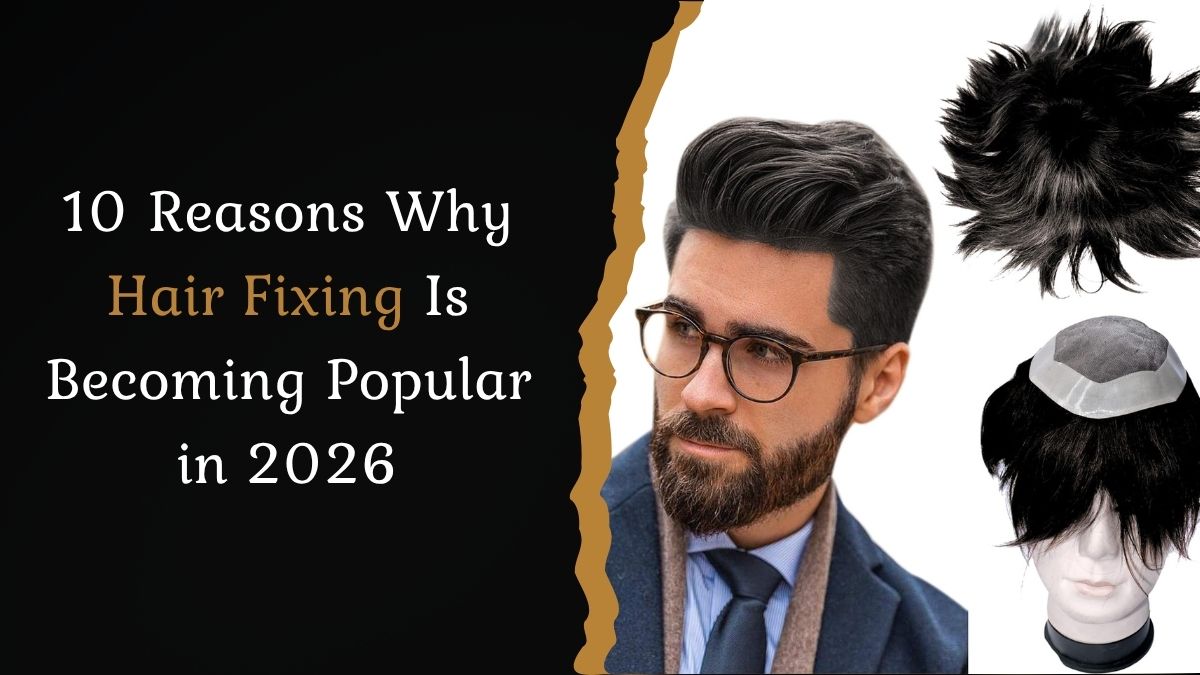
Hair loss is no longer viewed only as an age-related concern. Men and women can experience thinning hair, receding hairlines, bald patches, or diffuse hair loss for many different reasons, including hereditary factors, age, medical conditions, hormonal changes, and certain treatments. The American Academy of Dermatology (AAD) notes that hair loss has many causes and that identifying the underlying cause is an important part of choosing an appropriate approach.
For people seeking an immediate cosmetic solution without surgery, hair fixing, hair patches, hair systems, hair wigs, and non-surgical hair replacement have become increasingly popular options.
But what exactly is driving this growing interest in 2026?
In this guide, we explain 10 reasons why hair fixing is becoming popular in 2026, what makes modern hair replacement systems different, who may consider them, and what to look for before choosing a hair fixing solution.
What Is Hair Fixing?
Hair fixing is a non-surgical hair replacement method designed to cover areas affected by hair thinning or hair loss using a customized hair system, hair patch, hairpiece, or similar solution.
Unlike a surgical hair transplant, hair fixing does not involve transplanting hair follicles from one area of the scalp to another. Instead, a professionally selected hair replacement system is designed to blend with the person's existing hair, hairline, hairstyle, and scalp appearance.
Depending on the type of system, it may be customized according to:
- Hair color
- Hair density
- Hair length
- Hair texture
- Hairline design
- Base material
- Coverage area
- Hairstyle
- Individual lifestyle requirements
A hair patch may be suitable when hair loss is limited to a specific area, while a larger hair system or hair wig may provide coverage over a wider region.
The AAD also recognizes wigs, hairpieces, and scalp prostheses as options for concealing visible hair loss. A custom-made scalp prosthesis can be designed for a closer fit.
10 Reasons Why Hair Fixing Is Becoming Popular in 2026
1. It Provides an Immediate Cosmetic Solution
One of the biggest reasons people consider hair fixing is the possibility of achieving a fuller-looking hairstyle without waiting months for hair regrowth.
Hair growth treatments and procedures may take time before visible changes occur. For example, the AAD notes that some medical hair-loss treatments can take months to show results.
A properly fitted hair patch or hair system, on the other hand, is primarily designed to provide immediate visual coverage.
This makes hair fixing particularly appealing to people who want to improve the appearance of thinning areas before:
-
A wedding
-
A professional event
-
A business meeting
-
A photoshoot
-
A social occasion
-
Everyday activities
The key is to choose a hair system that matches the individual's natural appearance rather than simply selecting a generic wig.
2. Modern Hair Systems Can Look More Natural
Older generations of wigs and hairpieces often had a reputation for looking obvious or artificial.
Modern non-surgical hair replacement systems have evolved significantly in terms of customization, hairline design, density, base construction, and styling options.
A professionally customized hair system can be designed to replicate important characteristics of natural hair, including:
- Hair direction
- Hair density
- Hairline shape
- Hair color
- Hair texture
- Hair length
- Natural-looking parting
The goal is not simply to "cover baldness." The goal is to create a hairstyle that integrates visually with the person's existing appearance.
This is one reason natural-looking hair replacement has become an important search and buying consideration in 2026.
3. Hair Fixing Is a Non-Surgical Hair Replacement Option
Not everyone experiencing hair loss wants surgery.
A hair transplant is a surgical procedure that involves moving healthy hair follicles from one part of the scalp to areas affected by hair loss. It can provide permanent results for suitable candidates, but it involves a medical procedure and requires appropriate evaluation.
Hair fixing follows a different approach.
A non-surgical hair replacement system focuses on cosmetic coverage rather than surgically moving follicles.
This can make hair fixing attractive to people who:
-
Do not want a surgical procedure
-
Want an immediate cosmetic change
-
Prefer a reversible hair-loss solution
-
Want to avoid a surgical recovery period
-
Want to experiment with different hairstyles
However, hair fixing does not treat the underlying medical cause of hair loss. If hair loss is sudden, severe, patchy, or unexplained, professional medical evaluation should come first. The AAD recommends determining the cause of hair loss before choosing treatment.
4. Customized Hair Patches Can Address Specific Bald Areas
Hair loss does not always affect the entire scalp.
Some people experience:
- Receding hairlines
- Crown thinning
- Small bald patches
- Hair thinning at the top of the scalp
- Localized areas of reduced density
For these situations, a hair patch or smaller customized hair system may be considered instead of a full hair wig.
A customized hair patch can be designed around the affected area and blended with surrounding hair.
This creates a more targeted approach to non-surgical hair replacement.
For example, someone with crown thinning may require a different solution from someone experiencing extensive scalp hair loss. The appropriate system depends on the individual's hair-loss pattern, existing hair, desired appearance, and lifestyle.
5. It Can Offer More Hairstyling Flexibility
Hair loss can make people hesitant to experiment with hairstyles.
A well-designed hair system can provide additional styling possibilities, depending on its construction and attachment method.
People may be able to choose from different:
- Hair lengths
- Hair colors
- Hair densities
- Hair textures
- Hairline designs
- Hairstyles
This customization is particularly useful for people who want their hair replacement system to complement their existing personal style.
Instead of choosing a generic wig, modern hair fixing can focus on creating a personalized hair replacement solution.
6. Hair Fixing Can Help People Feel More Confident
Hair loss is not only a cosmetic issue.
For some individuals, visible thinning or baldness can affect how they feel about their appearance and may make them uncomfortable in social or professional situations.
The AAD notes that wigs and concealers can provide immediate cosmetic results and may boost self-esteem for people experiencing hair loss.
A natural-looking hair patch or hair system may help someone feel more comfortable with their appearance.
This can be particularly relevant for people who have been dealing with:
- Receding hairlines
- Visible scalp
- Crown baldness
- Diffuse thinning
- Patchy hair loss
- Significant hair density reduction
Hair fixing should therefore be viewed as a cosmetic hair replacement option, rather than a medical cure for hair loss.
7. There Are Options for Different Levels of Hair Loss
Another reason for the popularity of hair replacement systems is the variety of solutions available.
Depending on the amount and location of hair loss, options may include:
| Hair Loss Concern | Possible Hair Replacement Option |
|---|---|
| Small bald area | Customized hair patch |
| Crown thinning | Partial hair system |
| Receding hairline | Hairline-focused system |
| Diffuse thinning | Hair system |
| Extensive hair loss | Hair wig or larger hair replacement system |
The exact choice should be based on an individual's scalp condition, remaining hair, desired appearance, and lifestyle.
There is no single "best hair fixing" solution for everyone.
8. Hair Wigs and Hair Systems Are Available for Different Needs
The term hair wig covers a broad category of hair replacement products.
Some wigs are designed for temporary cosmetic use, while others are customized for individuals experiencing significant hair loss.
The AAD describes a scalp prosthesis as a custom-made wig intended to provide a closer fit and coverage for hair loss.
Today, people can consider different hair replacement options based on their needs, including:
- Full hair wigs
- Partial hair systems
- Hair patches
- Hairpieces
- Custom hair systems
- Non-surgical hair replacement solutions
The important factor is selecting an option that provides an appropriate balance of appearance, comfort, maintenance, and lifestyle compatibility.
9. Hair Fixing Can Be More Convenient Than Waiting for Hair Regrowth
Hair regrowth is not always predictable.
Hair loss has many possible causes, and treatment outcomes vary according to the underlying condition. The AAD emphasizes that there is no single hair-loss treatment that works for everyone.
Some people may need:
- Medical treatment
- Lifestyle changes
- Prescription medication
- Hair-loss monitoring
- Hair transplantation
- Cosmetic coverage
Hair fixing can complement this decision-making process by providing a cosmetic solution while the person explores appropriate treatment options.
For someone who wants to improve their appearance immediately, this convenience can be a significant advantage.
10. Greater Awareness of Non-Surgical Hair Replacement
The final reason is increased awareness.
People today have access to more information about hair loss, hair systems, hair patches, wigs, hair transplantation, and other hair restoration options than ever before.
Instead of considering only one solution, people can compare different approaches according to:
- Hair-loss pattern
- Expected appearance
- Budget
- Lifestyle
- Maintenance requirements
- Desired timeline
- Surgical vs non-surgical preferences
This broader awareness has helped make non-surgical hair replacement an increasingly visible option for people looking for cosmetic coverage.
Hair Fixing vs Hair Transplant: What's the Difference?
One of the most common questions is whether hair fixing is better than a hair transplant.
The answer depends on the individual's goals.
| Feature | Hair Fixing | Hair Transplant |
|---|---|---|
| Type | Non-surgical cosmetic solution | Surgical hair restoration |
| Immediate visual coverage | Yes | No, results develop over time |
| Uses transplanted follicles | No | Yes |
| Surgical procedure | No | Yes |
| Customizable appearance | Yes | Yes |
| Treats underlying hair loss | No | Can provide permanent restoration in suitable candidates |
| Maintenance | Usually required | Ongoing natural hair care |
| Reversible | Generally yes | Surgical procedure |
A hair transplant may be appropriate for some people seeking a longer-term restoration option, while hair fixing may appeal to those prioritizing immediate cosmetic coverage without surgery. The AAD notes that hair transplantation can provide permanent results for appropriate candidates.
Who Can Consider Hair Fixing?
Hair fixing may be considered by adults experiencing visible hair thinning or hair loss, including people with:
- Male pattern hair loss
- Female pattern hair thinning
- Receding hairlines
- Crown thinning
- Diffuse hair thinning
- Localized bald areas
- Some forms of patchy hair loss
- Significant cosmetic hair loss
However, suitability depends on the individual's situation.
If you have sudden hair loss, rapidly expanding bald patches, scalp inflammation, itching, pain, or unexplained shedding, it is important to seek medical evaluation rather than relying only on cosmetic coverage.
Hair loss can have many causes, and identifying the cause is an important first step.
How to Choose the Right Hair Fixing Solution?
Choosing a hair patch or hair system should involve more than selecting a color from a catalog.
Consider the following factors:
1. Match the Hair Color
The replacement hair should blend naturally with your existing hair.
2. Consider Hair Density
Excessively dense hair can look unnatural, especially when the surrounding natural hair is thin.
3. Choose the Right Hairline
A natural-looking hairline is one of the most important elements of a convincing hair replacement system.
4. Consider the Base Material
Different hair systems use different base constructions. Your choice should depend on appearance, comfort, durability, and maintenance preferences.
5. Think About Your Lifestyle
Your daily activities matter. Someone who exercises frequently may have different requirements from someone looking primarily for an occasional cosmetic solution.
6. Ask About Maintenance
Before choosing a hair system, understand how frequently it requires cleaning, adjustment, reattachment, or replacement.
7. Look for Professional Customization
A professionally fitted hair system can generally provide a more personalized result than a generic, off-the-shelf option.
Is Hair Fixing Safe?
Hair fixing is primarily a cosmetic hair replacement approach, but the safety and comfort of a particular system can depend on its attachment method, materials, hygiene, scalp condition, and maintenance.
Poor fitting, excessive tension, inadequate cleaning, or inappropriate attachment practices may cause discomfort or scalp irritation.
People with existing scalp conditions should seek appropriate professional advice before using a hair system.
It is also important not to confuse cosmetic hair fixing with treatment for the underlying cause of hair loss.
Hair Fixing Maintenance: What Should You Know?
A hair system requires appropriate care to maintain its appearance and condition.
General Hair Fixing maintenance may include:
- Regular cleaning
- Proper drying
- Gentle brushing
- Appropriate hair products
- Scheduled professional maintenance
- Checking the attachment system
- Protecting the hair system from unnecessary damage
The exact maintenance schedule depends on the type of hair system, base material, attachment method, hair quality, and lifestyle.
If the system is professionally fitted, ask the provider for specific care instructions.
Frequently Asked Questions About Hair Fixing
What is hair fixing?
Hair fixing is a non-surgical cosmetic hair replacement method that uses a hair patch, hair system, hairpiece, or wig to provide coverage over areas affected by hair loss.
Is hair fixing the same as a hair transplant?
No. Hair fixing is non-surgical and provides cosmetic hair coverage, whereas a hair transplant is a surgical procedure that moves hair follicles from one area of the scalp to another.
Does a hair patch look natural?
A properly selected and customized hair patch can provide a natural-looking appearance. Hair color, density, texture, hairline, base design, and professional fitting all influence the final result.
How long does a hair fixing system last?
There is no single lifespan for every hair system. Durability depends on the hair quality, base material, attachment method, maintenance routine, frequency of use, and lifestyle.
Can women use hair fixing?
Yes. Hair fixing and non-surgical hair replacement can be considered by women experiencing hair thinning or hair loss. The appropriate solution depends on the pattern and extent of hair loss.
Can men use a hair patch for a receding hairline?
Yes. A customized hair system can be designed to address specific areas such as a receding hairline or crown thinning. The design should be based on the individual's existing hair and desired appearance.
Is hair fixing a permanent solution for hair loss?
No. Hair fixing provides cosmetic coverage and does not permanently restore hair follicles. It should not be presented as a medical cure for the underlying cause of hair loss.
Which is better: a hair patch or a full wig?
It depends on the extent of hair loss. A hair patch may be suitable for localized thinning or bald areas, while a full wig may be more appropriate when there is extensive hair loss.
Can I style a hair replacement system?
Many hair replacement systems can be cut and styled according to their construction and the type of hair used. Your provider can explain which styling options are appropriate for your specific system.
Should I see a doctor before getting hair fixing?
If your hair loss is sudden, unexplained, rapidly progressing, painful, inflamed, or associated with other symptoms, medical evaluation is advisable. Finding the cause of hair loss can help determine the most appropriate treatment approach. (American Academy of Dermatology)
Final Thoughts
The growing popularity of hair fixing in 2026 reflects a broader demand for personalized, non-surgical and immediate cosmetic hair replacement options.
From hair patches and custom hair systems to hair wigs and non-surgical hair replacement, people now have several ways to manage the visible effects of hair loss.
The biggest advantages are the potential for immediate cosmetic coverage, customization, natural-looking styling, flexibility, and avoidance of surgery.
However, hair fixing should not be considered a treatment for the underlying cause of hair loss. If you are experiencing significant or unexplained hair loss, identifying the cause should come first.
Once you understand your hair-loss pattern and goals, you can compare options such as hair fixing, hair patches, hair wigs, medical treatments, and hair transplantation and choose the approach that best suits your individual needs.
Quick Answer: Why Is Hair Fixing Popular in 2026?
Hair fixing is becoming popular because it offers an immediate, customizable, non-surgical way to improve the appearance of hair thinning and hair loss. Modern hair patches and hair systems can be tailored to hair color, density, texture and hairline, making them a practical cosmetic option for many people.